
When Should Businesses Rent Containers on Site?
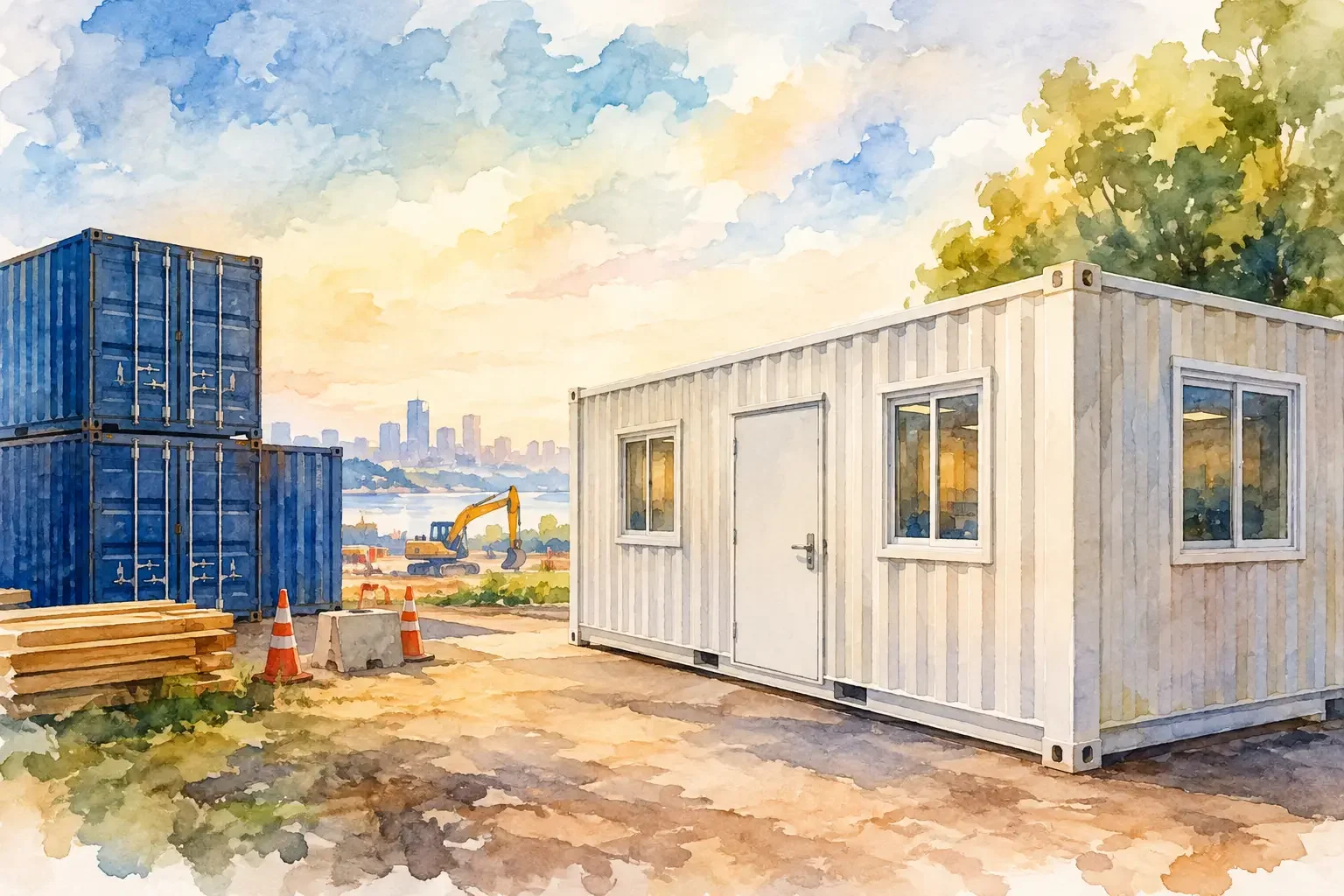
A construction superintendent has material arriving next week, but the permanent warehouse will not be ready for three months. A grocery operator needs cold storage during a refrigeration upgrade. A manufacturer has outgrown its parts room while waiting for a facility expansion. In situations like these, the question of when should businesses rent containers is less about the container itself and more about how long the operational need will last.
Renting gives a business usable, secure space without committing capital to an asset it may not need once a project, peak season, or temporary disruption ends. The right decision depends on duration, site conditions, required modifications, and whether flexibility is more valuable than long-term ownership.
When Should Businesses Rent Containers Instead of Buying?
Businesses should generally rent containers when the need is temporary, uncertain, or tied to a specific project schedule. Rental containers work especially well when an operation needs to add capacity quickly but does not want to carry the cost and responsibility of a permanent asset after the need passes.
A rental is often the practical choice for construction projects, seasonal inventory surges, short-term equipment storage, temporary office space, facility repairs, disaster recovery, and event operations. It can also make sense while a company evaluates a longer-term site plan. Rather than buying immediately, a facilities team can use a rental container to test where storage, office, or refrigerated capacity fits best in the workflow.
Buying may be the better financial decision for a container that will remain in service for years, particularly if it requires extensive customization. But a short-term need can become an expensive ownership decision if the unit sits unused after a project wraps up. Rental keeps the commitment aligned with the actual operating timeline.
Temporary Storage That Does Not Slow the Job
Jobsite storage is one of the clearest rental use cases. Contractors often need a weather-resistant place for tools, electrical equipment, finish materials, safety supplies, and high-value inventory before a building has secure enclosed space. A steel shipping container provides ground-level access and can be positioned close to the work area, reducing unnecessary handling and daily transport.
Rental is particularly effective when storage demand changes by project phase. Early sitework may require secure space for smaller equipment and consumables. Interior build-out may bring higher volumes of fixtures, flooring, millwork, and appliances. Once turnover is complete, that storage demand usually disappears or moves to another site.
The same principle applies to industrial shutdowns and plant maintenance. During a turnaround, a facility may need temporary storage for replacement components, specialty tools, or staged materials. Renting lets the maintenance team add capacity for the outage window without reconfiguring permanent warehouse space.
Before scheduling delivery, confirm the container footprint, access path, surface condition, and required clearance. A level, stable placement area makes delivery and later pickup more predictable. Teams should also plan for door swing clearance and forklift access if palletized inventory will be moved in and out frequently.
Project Offices and Temporary Workspaces
A standard storage container is not always enough. Project teams often need a field office, dispatch point, check-in station, or secure administrative workspace near the work. Renting a ground-level office container can provide enclosed space without waiting for a conventional temporary building to be installed.
Office requirements vary. A small jobsite team may only need a personnel door, windows, lighting, electrical outlets, and HVAC. A larger operation may need multiple offices, shelving, work surfaces, or a layout that separates supervisors from document storage. If the workspace is needed for only one project or a temporary operating period, renting can preserve capital for labor, materials, and project execution.
The trade-off is customization. A highly specialized office layout may make more sense to purchase, especially if the business can redeploy it across multiple sites. For a straightforward, time-bound field office, rental is usually faster and simpler.
Cold Storage During Peaks, Repairs, and Transitions
Refrigerated containers, often called reefer units, give food service, grocery, agriculture, healthcare, and distribution operations flexible temperature-controlled capacity. Renting is a strong fit when the cold-chain requirement is driven by a temporary event rather than a permanent expansion.
Examples include holiday inventory, harvest season, freezer repairs, warehouse renovations, product launches, and emergency backup capacity. A reefer can be placed near a loading dock, commercial kitchen, production area, or distribution center, provided the site has appropriate electrical service and sufficient operating clearance.
Temperature control changes the rental decision because operating requirements matter as much as physical space. Teams should define the target temperature range, product type, loading frequency, power availability, and duration before selecting a unit. A reefer that is properly sized but lacks reliable power or is positioned too far from the workflow will create avoidable handling risk.
For businesses facing a temporary refrigeration outage, speed is often the deciding factor. Renting capacity can protect inventory and maintain service while permanent equipment is repaired or replaced.
Seasonal Demand and Inventory Overflow
Seasonal storage needs are rarely predictable enough to justify a permanent building expansion. Retailers may need space before peak sales periods. Agricultural operations may need secure storage for supplies, equipment, or packaged product. Manufacturers may carry additional raw materials before a major production run. Rental containers give these businesses a way to scale capacity at the site where the work occurs.
This approach also reduces dependence on off-site warehousing for materials that need frequent access. Every trip between a remote storage facility and the jobsite adds labor, scheduling complexity, and the possibility that critical inventory is not available when needed. On-site container storage keeps essential items closer to the people using them.
Security should be part of the rental plan, not an afterthought. Consider container condition, lock protection, placement visibility, lighting, access controls, and whether the unit will hold high-value tools or regulated materials. The best container location balances convenience with site security and traffic flow.
During Facility Repairs, Relocation, or Emergency Response
Operational disruptions create temporary space problems quickly. A warehouse roof repair can force inventory outside its normal footprint. A fire or water event may remove an area from service. A company moving between locations may need a secure bridge solution while leases, permits, or construction schedules catch up.
Containers provide a practical buffer in these scenarios. Storage units can hold salvageable inventory, equipment, maintenance supplies, or records. Office containers can support a temporary command point for contractors, operations leaders, or insurance and restoration teams. Reefer units can keep temperature-sensitive product protected when permanent refrigeration is unavailable.
Rental terms are useful here because the end date is often unclear at the outset. Repairs can uncover additional work, permits can take longer than planned, and replacement equipment can face supply-chain delays. A flexible container solution is easier to adjust than a rushed capital purchase made under pressure.
How to Decide Between Renting and Buying
The decision usually comes down to four operational questions: How long will the container be needed? Will the unit move from site to site after the current project? Does the application require permanent or specialized modifications? And is preserving capital more valuable than owning the asset?
Rent when the need is measured in months, tied to a known project, or subject to change. Rent when a facility needs immediate overflow capacity but has not finalized a long-term expansion plan. Rent when a temporary office, storage area, or refrigerated unit solves a short-term operating problem without creating a surplus asset later.
Consider buying when the container will be used continuously, redeployed regularly, or modified for a specific long-term workflow. For example, a manufacturer that needs a permanently installed parts-storage unit with roll-up doors, shelving, electrical service, and branded exterior finishes may benefit more from ownership. The same may be true for a contractor that can move a customized office container from one project to the next.
It is also worth comparing total operating cost rather than focusing only on the monthly rental rate or purchase price. Include delivery, pickup, site preparation, required accessories, electrical setup for office or reefer units, security needs, maintenance responsibility, and the expected value of the unit after the project ends.
Configure the Container Around the Work
A container should fit the operation, not force the operation to work around it. Determine whether a 20-foot or 40-foot footprint is appropriate, whether standard or high-cube height is needed, and how the unit will be loaded. A 20-foot container can be easier to place on constrained sites, while a 40-foot unit provides more volume for larger inventory or longer-term staging.
Modifications and accessories matter when they improve productivity or safety. Personnel doors simplify daily access. Roll-up doors support frequent loading. Shelving keeps parts organized. Lockboxes add security. Insulation, HVAC, electrical packages, and windows turn a steel structure into usable workspace. For more involved projects, a provider such as Conexwest can coordinate container selection, configuration, and delivery so the unit arrives ready for its intended role.
The best time to rent is before a space shortage becomes a jobsite delay, a cold-chain failure, or a workflow bottleneck. Define the operational gap, map the expected duration, and choose a container setup that gives the team room to keep moving.