
Steel Containers Versus Storage Sheds: Best Fit
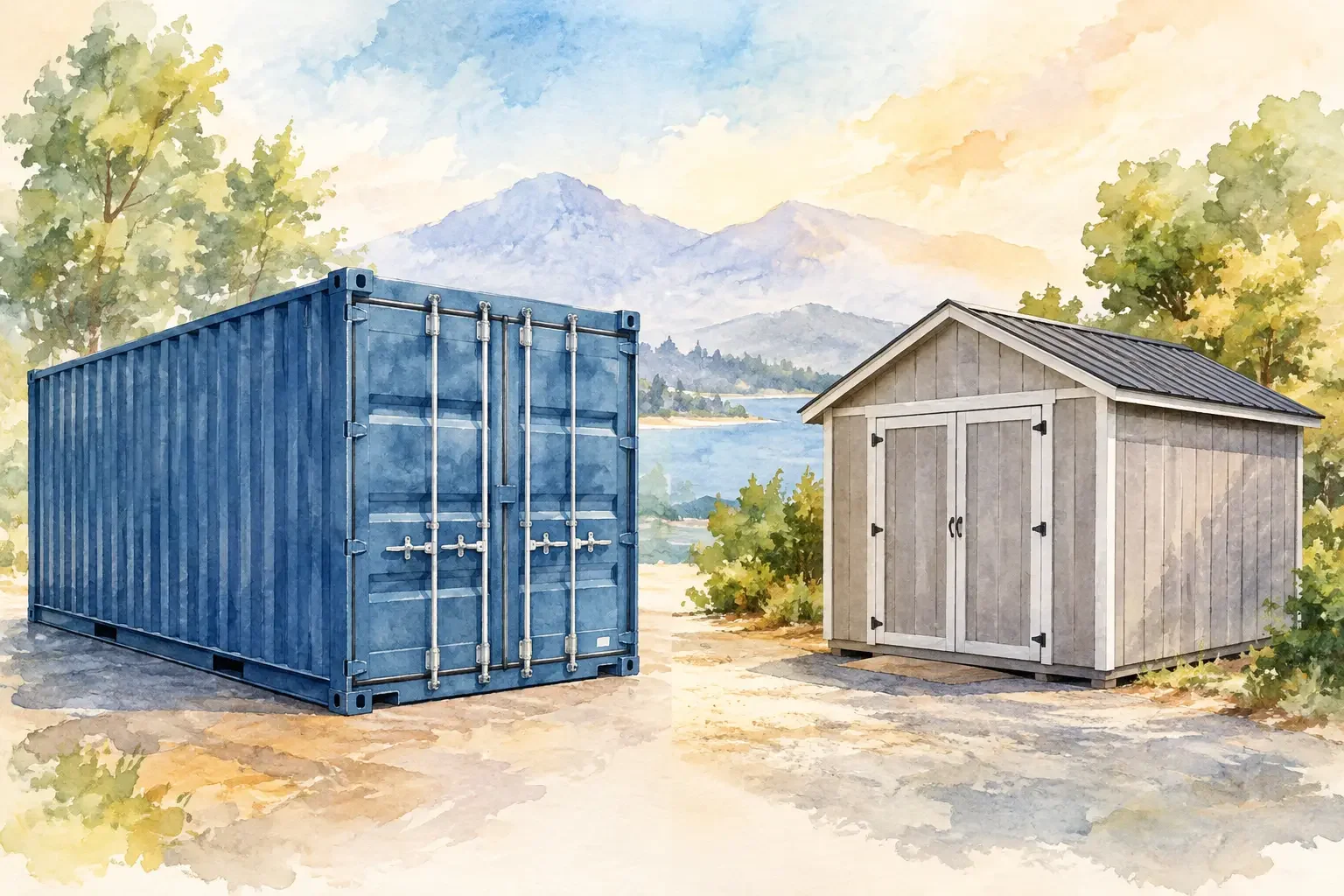
A crowded job site, a growing inventory backlog, or a facility expansion rarely creates a simple storage problem. It creates an operational one: equipment needs protection, crews need access, and the solution has to arrive on schedule. When comparing steel containers versus storage sheds, the better choice depends less on appearance and more on security, site conditions, expected service life, and how the space will be used.
A storage shed can be a practical option for light-duty, permanent backyard-style storage. A steel shipping container is typically better suited to commercial, industrial, and mobile applications where security, transportability, and durable weather protection carry more weight. Neither is automatically right for every site, but their capabilities are substantially different.
Steel Containers Versus Storage Sheds at a Glance
The primary distinction is structural purpose. A steel container is engineered for intermodal transportation. It is built to be lifted, stacked, secured, and exposed to long-distance rail, road, and ocean freight. That design translates well to demanding ground-level storage, particularly on construction sites, yards, agricultural properties, manufacturing campuses, and temporary project locations.
Most storage sheds are engineered for stationary use. Their construction may range from lightweight resin panels and metal framing to wood-framed structures with roofing and siding. A well-built shed can provide useful storage, but its performance depends heavily on materials, foundation work, assembly quality, and local weather exposure.
For a facilities manager, the question is not whether one structure can hold supplies. Both can. The question is whether the asset will still protect high-value tools, inventory, parts, or equipment after repeated use, site changes, severe weather, and attempted break-ins.
Security Favors Steel for High-Value Assets
Security is often the deciding factor. Shipping containers are constructed with corrugated steel walls, steel cargo doors, and heavy-duty locking gear. With a lockbox or other security accessories, they create a difficult target for opportunistic theft and unauthorized access.
That matters on an active construction site, where tools, copper, generators, materials, and small equipment can be exposed after hours. It also matters for operations storing replacement parts, packaged inventory, seasonal equipment, or confidential records. A container can be positioned close to the point of work, reducing unnecessary trips across a property while keeping materials protected.
Sheds can be secured, but their doors, windows, wall panels, and roof connections are generally more vulnerable. A premium wood or metal shed may offer a meaningful improvement over a basic retail kit, yet it usually requires added locks, reinforced doors, alarm systems, and potentially fencing to approach the security profile of a steel container.
Security is not only about theft. Steel containers also help control unauthorized access to chemicals, maintenance supplies, sharp tools, and other materials that should remain out of reach of the public or untrained personnel.
Durability Depends on Environment and Maintenance
A container is designed for hard use, but it is not maintenance-free. New or one-trip containers generally offer the cleanest appearance and longest remaining service life. Used containers may show dents, surface rust, repaired areas, and signs of previous freight use, but a wind and watertight unit can still be a highly capable storage asset for many commercial applications.
The roof is a key inspection point. A quality container should keep out wind and water, but standing water, fallen branches, or unaddressed corrosion can shorten its usable life. Proper placement and periodic inspection remain essential.
Sheds vary more widely. Plastic sheds resist rot but can become brittle after long-term UV exposure. Wood sheds need ongoing attention to paint, moisture intrusion, insects, and roof condition. Metal sheds can be economical but may use thin panels that dent easily, develop leaks at fasteners, or flex under wind loads.
Local climate changes the equation. In areas with high winds, heavy snow, salt air, or extreme temperature swings, buyers should evaluate anchoring, drainage, roofing, and corrosion protection before selecting either option. A container’s steel construction is an advantage, but modifications such as windows, doors, and roof penetrations must be professionally designed and installed to preserve performance.
Mobility Is a Major Container Advantage
A shed is typically installed once and remains in place. Moving it may require disassembly, a specialized building mover, repairs afterward, or a full replacement. That can be acceptable for a permanent property improvement, but it is less useful for contractors and organizations with changing site needs.
A steel container is a portable asset. It can be delivered to a job site, staging yard, farm, retail location, or industrial facility, then relocated when the project moves. This can make purchasing or renting a container more practical than constructing a shed at every temporary location.
Mobility also supports phased operations. A contractor may use a 20-foot container for secure tool storage during site preparation, add a second unit during peak construction, and remove both once the project is complete. A manufacturer can position seasonal overflow storage near a loading area, then relocate the unit as warehouse workflows change.
Delivery still requires planning. The site needs sufficient truck access, overhead clearance, a reasonably level placement area, and room for the delivery equipment to maneuver. Containers can be placed on compacted gravel, concrete pads, railroad ties, or engineered footings depending on the site, local requirements, and intended use.
Cost Should Include More Than the Purchase Price
A basic shed may have a lower upfront price than a container, especially at smaller sizes. However, the initial price can obscure the complete installed cost. Site preparation, assembly labor, anchoring, foundation work, security upgrades, electrical work, and future repairs all affect the final number.
Container pricing also varies by size, condition, location, delivery distance, and modifications. A used container may be a cost-effective storage solution when appearance is secondary. A new container may be the better fit for customer-facing locations, long-term asset ownership, or projects needing a cleaner exterior and more predictable condition.
The real comparison is total cost of ownership. For short-term projects, renting a container can preserve capital while providing immediate secure storage. For long-term operations, ownership may provide better value, particularly if the unit can be redeployed across multiple sites. A shed may make sense where a permanent, lower-security structure is sufficient and relocation is unlikely.
Usability Changes When Storage Becomes Workspace
A standard shed is generally intended for storage only. A container can start as storage and be configured for more specialized work. Personnel doors improve daily access without opening cargo doors. Roll-up doors support palletized materials and frequent equipment movement. Shelving, vents, lighting, electrical packages, insulation, HVAC, and windows can turn a basic steel box into an organized operational space.
This flexibility is useful when a project requires storage today but may need a secure parts room, maintenance station, jobsite office, ticket booth, retail pop-up, or equipment enclosure later. Containers can also be paired or modified into larger layouts when a single unit is no longer enough.
That does not mean every container should be modified. Each cut opening changes the structure and requires proper reinforcement, flashing, and finishing. If the need is simply weather-resistant storage for boxed materials, a standard cargo container may be the most efficient configuration. If employees will regularly work inside, ventilation, lighting, access, thermal comfort, and applicable building requirements need to be part of the scope from the start.
Permits, Zoning, and Site Requirements Can Decide the Outcome
Do not assume that a container avoids permits because it is movable, or that a shed is exempt because it is small. Rules vary by city, county, property type, duration of placement, and intended use. Setbacks, height restrictions, fire access, drainage, anchoring, screening, and utility connections may all apply.
Containers used as storage are often handled differently from containers converted into offices or occupied spaces. A temporary construction-site unit may have different requirements than a permanent container installation at a school, warehouse, or retail property. Confirm local zoning and building requirements before delivery, especially if electrical, plumbing, HVAC, or structural modifications are planned.
A level, well-drained site benefits both options. Keeping the base out of standing water reduces corrosion risk, supports door operation, and helps prevent moisture issues. For containers, the four corner castings should be adequately supported so the frame does not twist and cargo doors continue to open properly.
Which Storage Option Fits Your Operation?
Choose a storage shed when the structure will remain in one location, stored items have limited security exposure, and a conventional building appearance is a priority. It can be a sensible fit for light equipment, seasonal supplies, or lower-value materials at a stable site.
Choose a steel container when your operation needs stronger security, fast deployment, relocation capability, or a storage asset that can be adapted over time. It is particularly well suited to jobsites, equipment yards, industrial facilities, agricultural operations, distribution overflow, and any environment where storage needs can shift without much notice.
Before ordering, define what will be stored, who needs access, how frequently materials move in and out, whether employees will work inside, and how long the unit will remain on site. Those answers determine the right size, condition, door configuration, accessories, and delivery plan. Conexwest can help translate those requirements into a container configuration that works in the field, not just on paper.
The most useful storage solution is the one that protects the operation behind it. Select the structure based on the risk, workload, and next move your business expects to make.