
Shippers: 3 Checks to Verify Shipping Container Weight Limits
A standard 20-foot container typically carries a maximum gross weight near 52,831 pounds, while a 40-foot unit runs closer to 67,200 pounds, but the actual unit plate always governs over any published chart. Payload equals max gross weight minus tare weight. Before loading, we confirm three things every time: the container’s own data plate, whether the vehicle and route meet federal axle rules, and whether a verified gross mass has been submitted for ocean transit.
TL;DR:
- The maximum payload for a 40-foot container typically ranges around 59,200 pounds, but it depends on the actual tare weight listed on the CSC plate.
- The shipper must verify the container’s serial plate, confirm route and axle compliance, and submit a verified gross mass before loading to ensure legal and safe transport.
- Federal highway rules limit truck gross weight to 80,000 pounds and impose axle weight limits, which may restrict hauling capacity regardless of container rating.
- A proper VGM can be obtained by weighing the packed container or summing individual cargo weights, and it must be submitted early to avoid delays or risk rejection.
- Common errors include relying solely on published weight charts, ignoring chassis and route restrictions, and submitting VGM figures late or inaccurately.
Table of Contents
- Typical maximum gross weight and payload by container size
- Reading the CSC plate and calculating payload correctly
- SOLAS verified gross mass: the ocean loading requirement
- Federal road limits: axle weights, the Bridge Formula, and why the container plate isn’t the whole story
- Three checks to complete before loading or tendering a container
- How our process tightens weight compliance on every shipment
- Where shippers go wrong, and how to stay ahead of it
- Get verified container specs and delivery planning from us
- FAQ
- Sources
Typical maximum gross weight and payload by container size
Published equipment specs give a useful starting point, but tare weight varies by manufacturer, age, and modification history, so payload shifts even within the same nominal size class.
One detail trips up a lot of shippers: a 40-foot box does not automatically carry proportionally more cargo than a 20-foot box, because the 40-foot steel structure weighs more empty, so the payload gap between the two sizes is often smaller than the gross weight gap suggests. A loaded 20-foot container packed with dense freight can sometimes approach the practical payload of a 40-foot unit carrying bulkier, lighter cargo.
Exceptions widen this range further. Refrigerated units carry heavier tare because of insulation and cooling equipment, which trims payload noticeably. Older containers accumulate added tare from past repairs or modifications, and units converted for office or hazmat use carry structural additions that change the factory numbers entirely. None of these figures substitute for checking the individual unit.
Reading the CSC plate and calculating payload correctly
Every container built to international standards carries a Container Safety Convention plate, usually riveted near the door frame. That plate lists three figures that matter more than any published guide: maximum gross mass, tare mass, and the resulting maximum payload.
- Maximum gross mass: the heaviest the container may weigh fully loaded, including its own structure.
- Tare mass: the weight of the empty container itself.
- Maximum net payload: gross mass minus tare, the actual cargo allowance for that specific unit.
A sample calculation makes this concrete: a 40-foot unit rated at 67,200 pounds max gross with an 8,000-pound tare allows a payload of 59,200 pounds. Change the tare to 8,800 pounds on an older or modified unit, and payload drops to 58,400 pounds even though the container looks identical from the outside.
If the plate is corroded, painted over, or missing entirely, treat the unit as unverified cargo equipment. Request documentation from the supplier or have the unit reweighed before loading rather than estimating from a generic chart.
Pro Tip: Photograph the CSC plate at pickup and keep it with your shipping paperwork. It settles disputes fast if a weight question comes up later in transit.
SOLAS verified gross mass: the ocean loading requirement
Under the SOLAS convention, a packed container cannot be loaded aboard a vessel without a verified gross mass on file. This is a loading condition, not a paperwork formality, and the shipper carries responsibility for providing it.
Two methods satisfy the requirement:
- Method 1: weigh the packed container as a whole using calibrated and certified equipment.
- Method 2: weigh every package and piece of cargo individually, add the container’s tare weight, and sum the total.
The shipper named on the bill of lading submits the VGM to the carrier and terminal, and the timing matters because most terminals set a cutoff well before vessel loading begins. A terminal or shipmaster retains discretion to refuse a container that lacks a valid VGM, and missing or inaccurate figures can trigger rebooking, demurrage charges, or outright rejection at the port.
Federal road limits: axle weights, the Bridge Formula, and why the container plate isn’t the whole story
A container rated for 67,200 pounds gross does not mean a truck can legally carry that much on an Interstate highway. Federal rules set their own ceiling, separate from anything stamped on the container itself.
- Gross vehicle weight cap: 80,000 pounds for the full truck and trailer combination on the Interstate System.
- Single axle limit: 20,000 pounds.
- Tandem axle limit: 34,000 pounds.
The Bridge Formula calculates allowable weight based on the number of axles and the distance between them, not just the total load. A heavy container sitting on a chassis with closely spaced axles can exceed the formula’s allowance even when the gross weight stays under 80,000 pounds and the container plate permits more. Axle spacing, tractor configuration, and chassis design all factor into whether a specific combination is road legal on a specific route.
This is why federal regulation treats container rating, vehicle legality, and route compliance as three separate checks. Passing one does not mean the other two are satisfied. State weight limits can also vary from federal Interstate rules on non-Interstate roads, and overweight moves often require state-issued permits before dispatch. A carrier route review before tender catches these mismatches before they become a roadside citation.
Three checks to complete before loading or tendering a container
Combine equipment, road, and documentation checks into one sequence before any container moves.
- Verify the equipment: read the CSC plate for gross, tare, and payload figures, inspect for visible structural damage, and confirm reefer or genset specifications if the load requires temperature control.
- Confirm road and chassis legality: check that the carrier’s axle configuration and planned route satisfy Bridge Formula requirements and state weight limits, and arrange overweight permits if the load requires them.
- Secure ocean documentation: obtain the verified gross mass using an approved method and submit it to the carrier or terminal within their stated cutoff.
Pro Tip: Run all three checks in parallel rather than sequentially. A container that passes its plate check but fails a route review wastes less time when the problem surfaces before the truck is loaded.
How our process tightens weight compliance on every shipment
We provide documented unit specifications so buyers can see tare and gross figures before committing rather than discovering them at pickup. With wide delivery coordination, we work through chassis selection and route planning alongside the weight figures that matter for a legal, safe move.
When a load calls for custom modifications, such as insulation for cold storage or structural changes for an office conversion, we factor the resulting tare change into the specification sheet we provide, since any alteration to a container’s structure shifts its payload math. That documentation gives shippers a verified starting point instead of a generic chart.
Where shippers go wrong, and how to stay ahead of it
The most common mistake is treating a published weight chart as a substitute for the individual unit’s plate. A close second is overlooking chassis and axle configuration entirely, assuming that because the container is rated for a given gross weight, any truck can legally haul it. Late or inaccurate VGM submissions round out the list, usually from treating it as routine paperwork rather than a loading condition.
The fix is straightforward: verify the plate on every unit, request a route check from the carrier before tender, and lock down VGM figures early rather than at the terminal gate. Escalate to a specialist review for unusually heavy or odd-shaped freight, modified containers with nonstandard tare, or any move that crosses state weight jurisdictions.
— Conexwest
Get verified container specs and delivery planning from us
We provide documented specifications on units sold or rented, along with delivery planning that accounts for route and chassis needs from the start.
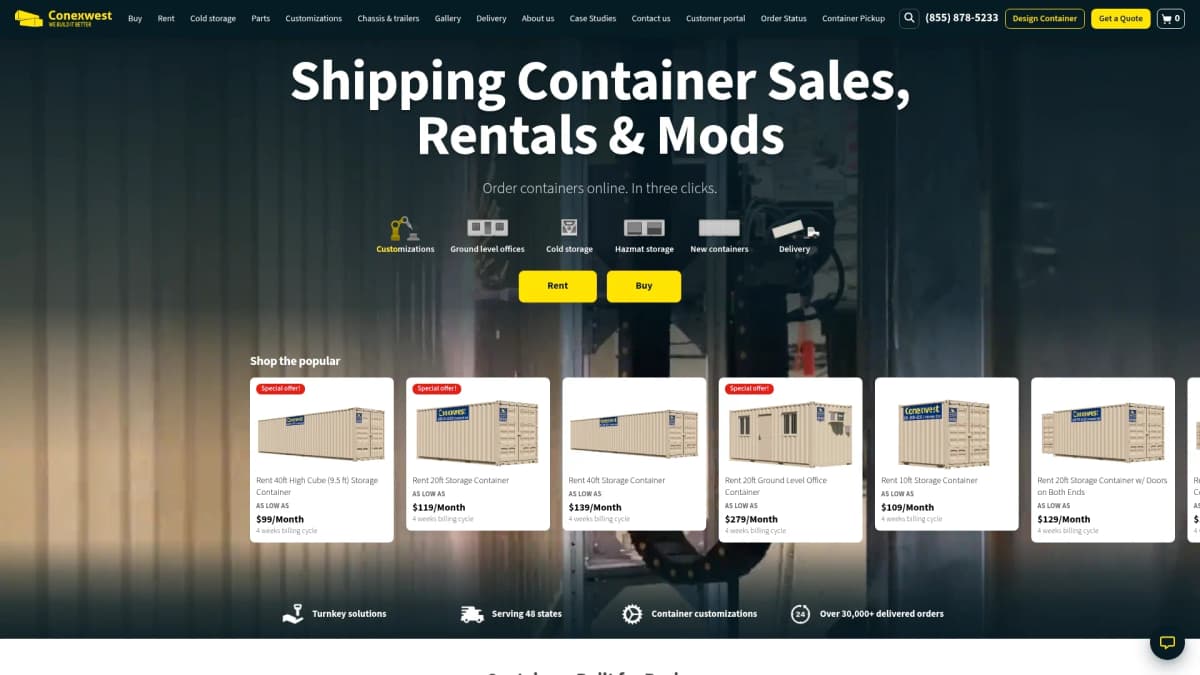
Whether you need a standard unit, a cold storage conversion, or a custom modification that changes tare weight, our shipping containers for sale page lets you review specs and request fabrication or delivery support directly. For temporary projects, our storage container rental option includes pickup service once your project wraps. If your load needs structural changes, our container customization team can walk through how a modification affects payload before you commit. Request a spec sheet or delivery quote today and get the documentation your carrier needs before the truck ever shows up.
FAQ
How much weight can a 40ft container legally carry on U.S. roads?
A 40-foot container’s CSC plate often allows a payload near 59,200 pounds, but the truck hauling it must also meet the federal 80,000-pound gross vehicle weight cap and Bridge Formula requirements based on axle spacing. The lower of the two figures sets the legal road limit, so a route and axle check is required alongside the container rating.
Do you need a concrete slab for a shipping container?
A concrete slab is not strictly required, but it provides the most stable, level foundation and helps prevent moisture buildup underneath the unit. Many buyers use concrete piers, gravel pads, or railroad ties instead, depending on ground conditions and how the container will be used.
What is the average cost of a 20ft shipping container?
Pricing for a 20-foot container depends on condition, modifications, and delivery location, so we quote it directly rather than publishing a flat figure. You can review current options and request pricing through our shipping containers for sale page.
How heavy is a 30-foot shipping container?
Standard shipping containers are manufactured in common sizes like 20 feet and 40 feet rather than 30 feet, so there is no standard CSC-rated 30-foot unit. If you encounter a 30-foot container, it is likely a custom or modified unit, and you should check its individual CSC plate for accurate tare and gross weight figures.
What is the difference between cargo worthy and wind and watertight containers?
A cargo worthy container has passed inspection confirming it is structurally sound for international ocean shipping, while a wind and watertight unit keeps out moisture and weather but has not been certified to the same cargo transport standard. Wind and watertight units are typically suited for storage rather than ocean freight.
Sources
- 20ft & 40ft container guide — Freightos
- Verification of the gross mass of a packed container — IMO
- Bridge Formula Weights — FHWA Freight Management and Operations
- eCFR § 658.17 — Weight