
Refrigerated Container Power Guide for Job Sites
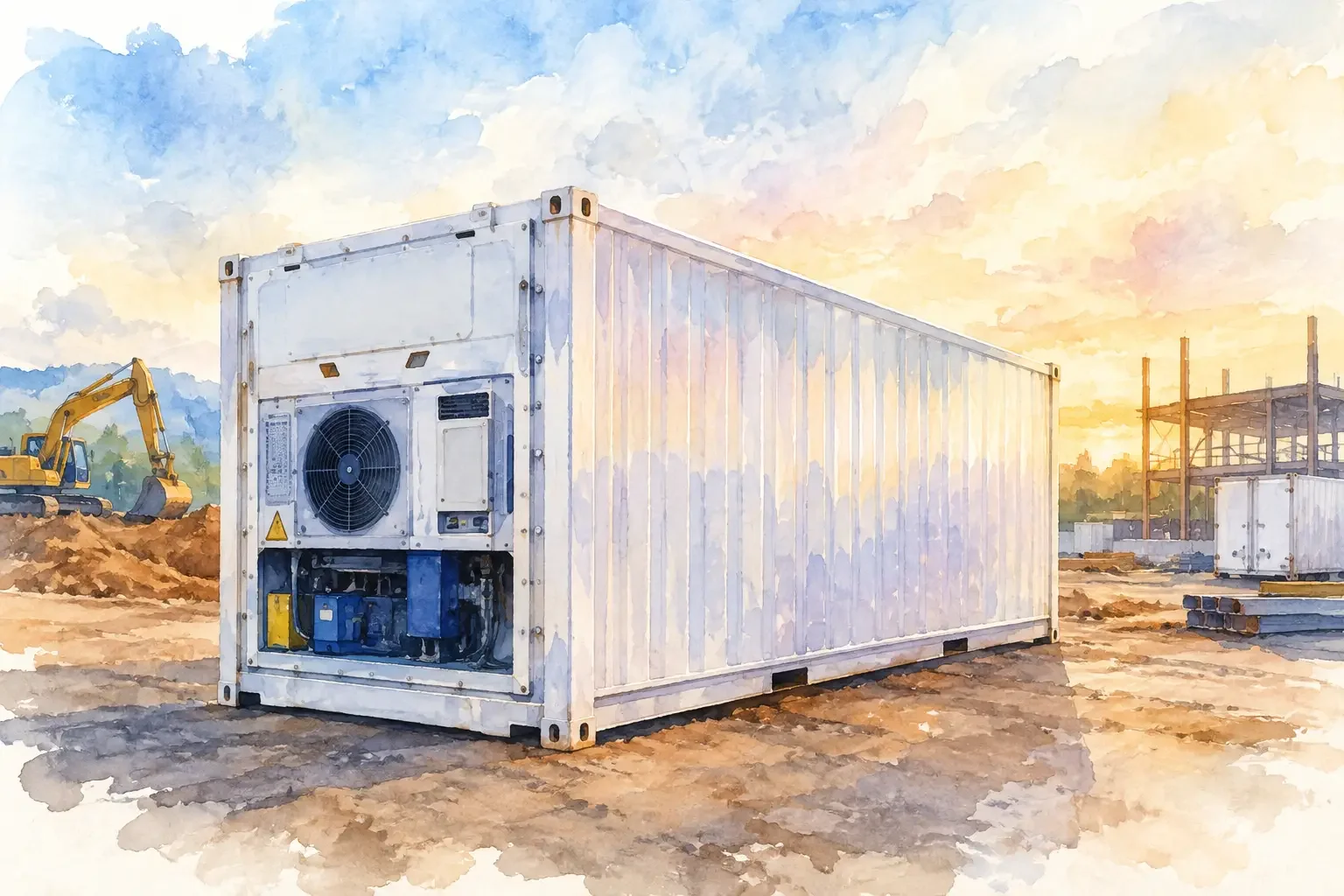
A reefer can arrive at a site fully capable of holding a precise setpoint, but it cannot protect inventory until it has the right power source. This refrigerated container power guide explains what facilities teams, contractors, and project managers should confirm before delivery day - from nameplate requirements and disconnects to generator planning and cable protection.
A refrigerated container is not simply a storage container with a cooling unit attached. It is an active piece of cold-chain equipment. Its refrigeration machinery, controls, fans, defrost cycle, and alarms all depend on stable electrical service. A power plan that looks adequate on paper can still create temperature swings, nuisance trips, or equipment damage if voltage, phase, capacity, and connection hardware do not match the unit.
Start With the Reefer Nameplate
The unit nameplate is the controlling source for power requirements. It identifies the required voltage, phase, frequency, maximum current, and other electrical specifications for that specific refrigeration machine. Do not select a power source based only on the container size. A 20-foot and 40-foot reefer may use different machinery, and units built for different markets can have different electrical configurations.
Many refrigerated containers used in U.S. commercial applications operate on 460-volt, three-phase, 60 Hz power. Other units may be configured for 208V, 230V, or another compatible service. Voltage and frequency must align with the reefer's equipment requirements. Supplying the wrong voltage or phase is not a workaround - it can prevent operation or damage components.
Before the container is dispatched, share the unit's nameplate information with the electrician, facility engineer, or generator provider. Confirm the available service at the exact installation point, not just at the building's main panel. Long runs, undersized conductors, and shared circuits can affect what the reefer receives under load.
Continuous Load Is Only Part of the Calculation
Refrigerated container power draw changes with operating conditions. A unit maintaining frozen product on a mild day may draw differently than one pulling down a warm load during summer heat. Compressor cycling, fan operation, defrost events, ambient temperature, product load, door openings, and setpoint all influence demand.
That is why electrical service should be designed around the manufacturer's electrical data and applicable code requirements, rather than a casual estimate of average consumption. The circuit must accommodate operating current without unnecessary breaker trips while providing proper overcurrent protection. A licensed electrician should size conductors, breakers, disconnects, and grounding for the container's listed requirements and the site conditions.
Refrigerated Container Power Guide: Site Connection Basics
A reefer needs more than an outlet nearby. A dependable setup includes a compatible receptacle or hardwired connection, an accessible disconnect, properly rated conductors, and physical protection for the cable run. The exact plug and receptacle configuration must match the unit's connection. Never force a plug, use an improvised adapter, or rely on extension cords not designed for the load and environment.
The connection point should remain dry, accessible, and clear of traffic. On busy construction sites, warehouses, farms, and event locations, cables are vulnerable to forklifts, trucks, foot traffic, and standing water. Route the cable where it will not be pinched by container doors, dragged across sharp edges, or driven over. If it must cross a travel path, use a rated cable protector and establish clear site controls.
A disconnect located near the reefer allows authorized personnel to isolate power safely for service or emergency response. It should be labeled clearly and remain accessible after the container is positioned. Avoid placing the reefer so tightly against a wall, fence, or stacked equipment that technicians cannot access the refrigeration unit and electrical connection.
Grounding is equally essential. Refrigerated containers have steel structures and electrical components operating in outdoor and industrial environments. The installation must be grounded and bonded according to the equipment instructions and local electrical requirements. This is a task for qualified electrical professionals, particularly where temporary power, wet conditions, or generators are involved.
Utility Power vs. Generator Power
Utility power is typically the simplest choice for longer-term refrigerated storage because it offers stable service without fuel management. It is often the right fit for grocery overflow, food and beverage production, pharmaceutical staging, agriculture, and facilities that need continuous cold storage for weeks or months.
Generator power can be practical for temporary jobsites, remote agricultural operations, disaster response, outdoor events, and locations where permanent electrical service is not available. The trade-off is operational responsibility. A generator must be correctly sized, fueled, maintained, grounded as required, and monitored. It also needs enough capacity to handle reefer startup and operating loads without unstable voltage or frequency.
Do not size a generator using only a rough kilowatt estimate from a similar unit. Use the reefer nameplate data and consult the generator supplier or electrical professional. Consider whether the generator will also support lighting, office trailers, pumps, tools, or other loads. A generator that performs adequately when the reefer is lightly loaded may struggle during high ambient temperatures or pull-down periods.
For high-value inventory, backup power should be part of the operating plan. That may mean a standby generator, a second available unit, an automatic transfer arrangement where appropriate, or a response procedure for moving product if power is interrupted. The right approach depends on the product's temperature tolerance, replacement value, regulatory needs, and how quickly the site can recover from an outage.
Plan for Pull-Down, Not Just Storage
Pull-down is the process of bringing product temperature down to the desired setpoint. It places a higher demand on the refrigeration system than simply maintaining already chilled or frozen goods. A reefer is generally most effective when loaded with product that has been pre-cooled to the intended storage temperature.
Using a refrigerated container to cool a large load of warm product can extend pull-down time, increase power use, and put inventory at risk. For example, a reefer set to 35°F is not automatically a substitute for a blast chiller. If product arrives warm and must be cooled rapidly, confirm the refrigeration capacity, loading plan, airflow requirements, and food-safety procedures before relying on the container.
Airflow matters inside the container as much as power outside it. Leave space around cargo as required for air circulation, avoid blocking return-air paths, and use appropriate pallets or racking. Dense floor-to-ceiling loading may maximize cube but can produce uneven temperatures. The best configuration depends on the product, packaging, target temperature, and how frequently personnel access the unit.
Monitor Temperature and Electrical Performance
A powered reefer still needs operating oversight. Establish a routine for checking setpoint, supply and return-air temperatures, alarm status, door condition, and visible cable damage. The inspection frequency should match the value and sensitivity of the stored goods. Frozen foods, vaccines, temperature-sensitive chemicals, and regulated products require tighter controls than short-term beverage overflow.
Remote temperature monitoring can add useful visibility for unmanned or after-hours sites. Alarms for temperature deviation, power loss, or door-open events help teams respond before a minor issue becomes a product-loss event. Monitoring does not replace physical checks, but it reduces the time between a fault and a response.
Keep the condenser area clear of debris, packaging, weeds, and equipment. The refrigeration unit needs airflow to reject heat. A reefer placed in direct sun, against a solid obstruction, or in a congested equipment yard may work harder than expected. Shade can reduce solar load in some applications, but it must not restrict service access or condenser airflow.
Delivery Day Checklist for Reefer Power
Before the truck arrives, confirm four operational details: the electrical service is energized and verified, the correct receptacle or connection is installed, the cable route is protected, and the unit location leaves room for delivery and refrigeration-unit access. Also confirm the placement surface is level and able to support the loaded container.
Once positioned, inspect the power cable and connection before energizing the unit. Set the required temperature, allow the container to stabilize, and verify that the controller is operating normally. Document the initial temperature and alarm status, especially when the reefer will store inventory immediately after delivery.
A refrigerated container solves a capacity problem only when power, placement, loading, and monitoring work together. Plan those details before delivery, and the reefer becomes dependable cold storage rather than another urgent item on the site punch list.