
7 Practical Containerized Data Center Examples
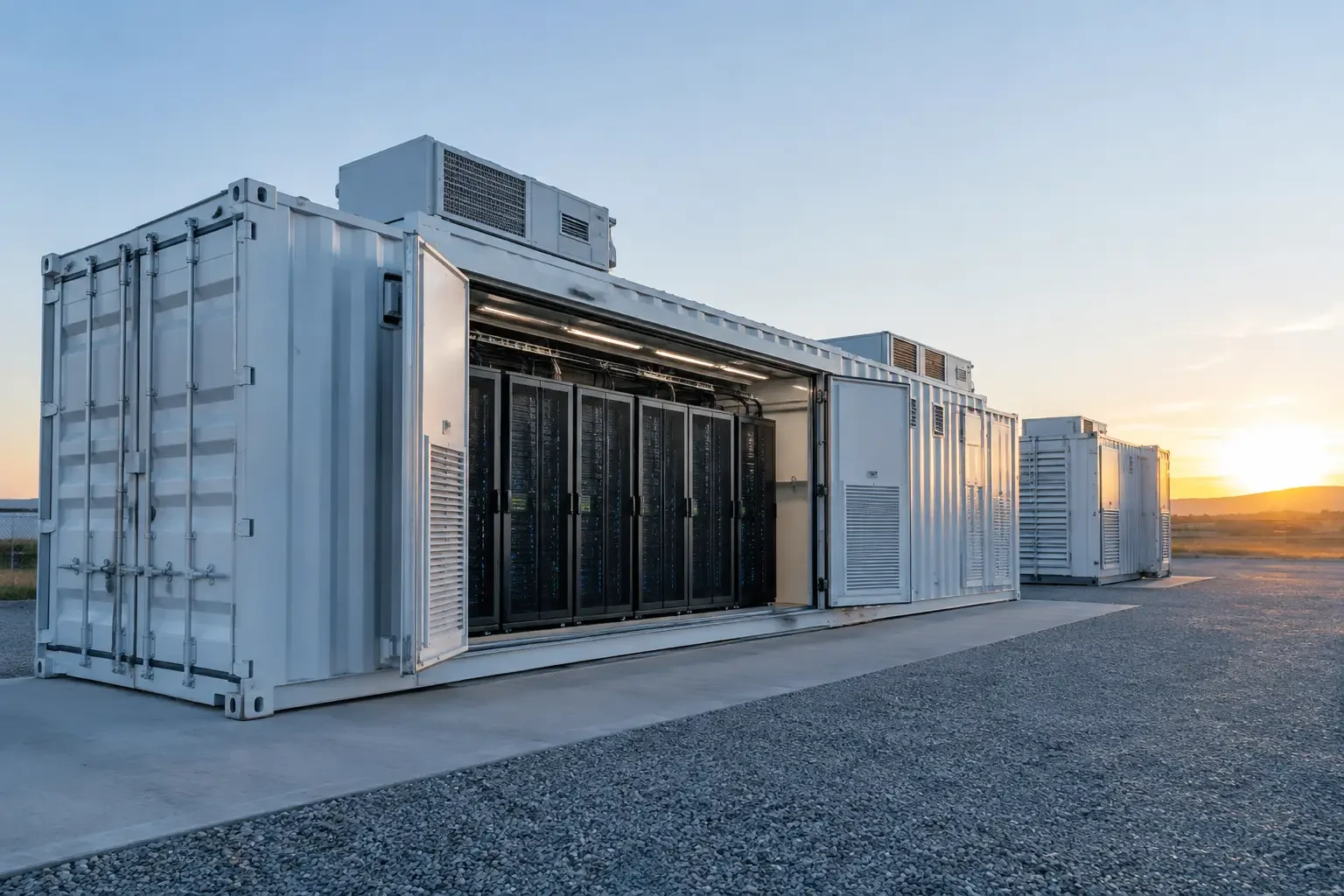
A remote site cannot wait months for a conventional server room, and an existing facility may not have usable floor space, utility capacity, or a safe place for critical equipment. That is where containerized data center examples become useful planning references. A steel intermodal container can provide the protected enclosure for a compact IT deployment, but the successful projects are engineered systems, not simply containers with server racks inside.
The enclosure must support the electrical, cooling, security, fire protection, monitoring, and access requirements of the equipment it houses. For project teams, the central question is not whether a container can hold IT hardware. It is whether the finished module can maintain uptime, be serviced safely, and arrive at the site ready for a controlled commissioning process.
What Defines a Containerized Data Center?
A containerized data center is a transportable, self-contained facility that houses computing, networking, and supporting infrastructure. The container provides a durable shell that can be deployed near the workload instead of requiring a permanent building expansion. Depending on the project, the module may contain IT racks alone or include switchgear, UPS systems, batteries, cooling equipment, cable pathways, and remote monitoring.
Standard 20-foot and 40-foot containers offer a familiar transportation format, but exterior dimensions are only the starting point. High-cube containers can provide useful additional interior height for overhead cable management and airflow routing. Used containers may be appropriate when the budget is tight and the unit will receive extensive modification. One-trip containers are often a better starting point when exterior condition, reduced corrosion risk, and a cleaner long-term asset matter.
The following containerized data center examples reflect common deployment models. Each has different power density, redundancy, site-preparation, and maintenance requirements.
7 Containerized Data Center Examples by Application
1. Edge Computing at a Manufacturing Plant
Manufacturing operations increasingly need local computing capacity for machine vision, process controls, quality data, and production analytics. A containerized module can be placed close to the production area while keeping heat, noise, and sensitive electronics out of the plant floor.
This design typically prioritizes filtered cooling, positive-pressure control, access control, and vibration management. If the plant has dust, washdown activity, or corrosive airborne contaminants, the enclosure and HVAC design need to account for those conditions from the outset. The container may be the right answer when the workload must stay local, but it still needs a dependable power path and a clear network connection to the plant and corporate systems.
2. Remote Energy and Utility Sites
Solar farms, wind facilities, substations, and oil and gas locations can require local infrastructure for supervisory control, communications, security systems, and field analytics. These sites are often exposed to high heat, windblown dust, snow, or long distances from service providers.
A containerized data center at an energy site should be selected around environmental exposure before rack count. Insulation, weather-resistant personnel doors, protected cable entries, exterior equipment mounting, and appropriately sized HVAC all affect field performance. In severe climates, redundancy in cooling and power is usually more valuable than trying to fit the maximum possible number of racks into the module.
3. Disaster Recovery for a Hospital or Public Agency
Hospitals, emergency operations centers, and public agencies may need temporary or supplemental computing capacity after a building outage, renovation, or regional emergency. A containerized data center can provide a controlled space for recovery systems, communications equipment, and temporary network infrastructure while a permanent facility is restored.
Speed matters in this use case, but it should not override resilience. The module may need generator connection points, UPS backup, fire detection and suppression, secure access logs, and protected pathways for fiber and power. Healthcare and government teams also need to confirm their compliance, data-handling, and physical-security obligations before deployment. The container solves the facility problem, not every governance requirement around the data.
4. Construction Site Technology Hub
Large construction projects now rely on site cameras, drone footage, BIM coordination, wireless networks, access systems, and project data. A secure containerized technology hub can protect those systems from weather, theft, and the daily disruption of an active jobsite.
This is a practical fit for container infrastructure because the project has a defined duration and may move across phases or sites. The unit can be positioned near a site office compound, elevated on a suitable foundation or prepared pad, and equipped with power distribution, cooling, lighting, and secure personnel access. Serviceability is essential: technicians need enough interior clearance to work around racks and electrical equipment without creating an unsafe aisle.
5. Retail Distribution and Warehouse Edge Nodes
Distribution centers need fast local connectivity for scanners, sorting equipment, warehouse automation, video systems, and inventory platforms. When the main IT room is undersized or poorly located, a containerized data center can create dedicated capacity without interrupting warehouse operations.
A warehouse deployment should be designed for vehicle traffic and loading-dock activity. Place the unit where forklifts, trailers, and snow removal equipment will not compromise access or damage exterior condensers and cable runs. Sound levels, heat rejection, and security lighting also deserve attention, especially when the container sits near employee entrances or neighboring properties.
6. Temporary Capacity During a Data Center Renovation
Replacing switchgear, modernizing cooling, or reconfiguring a server room can create a difficult continuity problem. A temporary containerized module gives an organization a place to relocate critical equipment while permanent work is completed.
This example is less about remote deployment and more about controlled transition. The project plan needs a detailed migration sequence, tested network connectivity, temporary utility connections, and a defined return-to-service plan. Because the equipment may be business-critical, confirm whether the temporary module requires N+1 cooling, dual utility feeds, generator support, or redundant network paths. A container can shorten the facilities portion of the project, but it does not eliminate the need for careful cutover planning.
7. Mobile Communications and Event Operations
Sports venues, large events, emergency response teams, and temporary media operations can require secure computing and network capacity for a limited period. A containerized deployment can support local servers, network gear, storage, and communications equipment where permanent infrastructure is unavailable or insufficient.
Mobility changes the design priorities. Cable connections should be protected but accessible, equipment must be restrained for transport, and exterior finishes may need branding or a lower-profile appearance. A 20-foot unit may be easier to position in tight spaces, while a 40-foot module provides more room for separated IT and power areas. The better choice depends on the equipment load, delivery route, crane or forklift access, and site footprint.
Build Decisions That Affect Deployment
The container shell is only one layer of the solution. Early planning should establish the IT load in kilowatts, target runtime during an outage, expected heat load, network entry points, and the level of redundancy required. Those inputs determine the electrical and mechanical design far more accurately than a generic rack count.
Cooling is often the primary constraint. High-density racks can exceed what a basic comfort-cooling system can handle, particularly in hot climates. Projects may use direct expansion systems, in-row cooling, air containment, or other specialized approaches, but the equipment must be sized for the actual heat load and local ambient conditions. Exterior HVAC placement should also leave room for maintenance and adequate airflow.
Physical modifications deserve equal attention. Insulation, interior wall finishes, raised flooring or cable trays, personnel doors, protected louvers, lighting, and equipment mounting points should be integrated before final assembly. Containers can be fabricated with electrical systems and climate-control provisions, while IT, electrical, and mechanical specialists complete the data center package. For projects beginning with a modified intermodal enclosure, Conexwest can support container selection, custom fabrication, and delivery coordination across the contiguous United States.
Finally, verify site readiness before the unit ships. That includes foundation design, drainage, utility stub locations, grounding, equipment-clearance zones, delivery access, and local permitting. A container that is ready at the fabrication yard can still face delays if the site has no prepared pad or cannot accommodate a delivery truck, crane, or tilt-bed operation.
The most useful example is the one that matches your operating risk. Define the workload, environmental exposure, service access, and recovery expectations first, then configure the container around those realities.