
Container Office Versus Site Trailer: Which Fits?
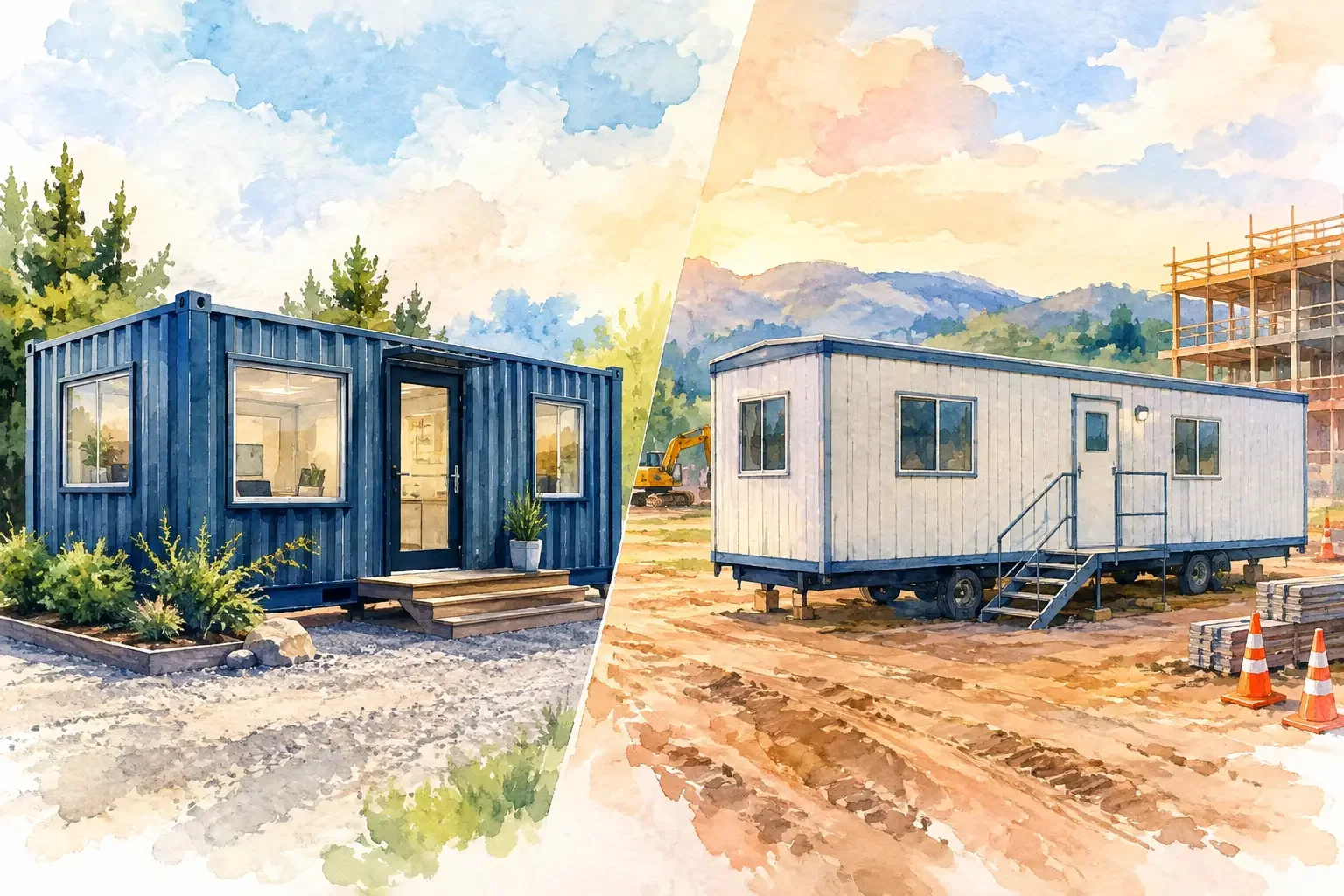
A jobsite office has to do more than provide a desk and a few chairs. It needs to arrive when the crew does, protect plans and equipment after hours, hold up through weather, and support changing site conditions. The container office versus site trailer decision comes down to how long the space will stay in place, how often it must move, and what level of security, customization, and long-term value the operation requires.
Both options can provide a functional workspace for construction, industrial, energy, agricultural, and public-sector projects. They are not interchangeable, though. A towable trailer prioritizes frequent relocation and fast deployment. A container office prioritizes steel construction, secure storage, and a configurable footprint that can continue serving the business after one project ends.
Container Office Versus Site Trailer: The Core Difference
A container office is built from an intermodal shipping container, commonly a 20-foot or 40-foot unit. It is modified with personnel doors, windows, insulation, electrical service, lighting, HVAC, interior wall finishes, and other features needed for daily work. Once delivered and set, it functions as a ground-level office and can also support storage, break areas, check-in stations, or specialized operational uses.
A site trailer, often called a mobile office trailer, is a purpose-built structure mounted on a chassis with wheels and a hitch. It is designed to be towed between sites, then leveled and connected to utilities. Models range from compact single-office trailers to larger units with multiple rooms, restrooms, and conference space.
The practical distinction is simple: site trailers are designed to travel more frequently; container offices are designed to stay secure and work hard in one location. That difference affects transportation, site preparation, security, lifespan, and the way each asset performs over time.
When a Site Trailer Is the Better Operational Choice
A site trailer is usually the better fit for short-duration work that moves from location to location. A utility contractor servicing multiple projects, a road crew advancing along a corridor, or an event operator rotating among venues may need a workspace that can be hitched, relocated, and put back into service with limited freight coordination.
This mobility has real value. A trailer can be repositioned on a large site or moved to a new project without arranging a specialized container delivery. For operations that need a temporary office for a few weeks or months, rental trailers can also keep upfront capital costs low.
Larger office trailers can offer an advantage in interior layout. Because they may be wider than a standard container, they can provide more open floor area for meetings, plan review, or administrative teams. Units with restroom facilities may reduce the need for separate sanitation arrangements, depending on local utility access and project requirements.
The trade-off is that trailers have more exposed components. Wheels, hitches, stabilizers, and undercarriage systems require inspection and maintenance. Their lighter construction can also be less suited to locations where theft, vandalism, harsh weather, or heavy daily use are persistent concerns. A trailer may be mobile, but mobility is only an advantage when the project truly needs it.
Where Container Offices Perform Better
A container office is a stronger choice when security, durability, and dual-purpose space are priorities. The steel shell is built for intermodal transport and stacking, which gives it a level of structural toughness that many conventional site trailers do not match. For job sites where tools, drawings, electronics, inventory, or controlled materials must remain protected overnight, that construction matters.
Ground-level access is another practical benefit. A container office can be set directly on a prepared, level surface, allowing workers and visitors to enter without climbing trailer stairs. This is useful for sites that receive deliveries, host customer meetings, or need a more accessible entry configuration. Ramps, wider doors, and other accessibility features can be incorporated when the project calls for them.
Container offices also support a more tailored build. A basic office may include one personnel door, windows, electrical outlets, lighting, and HVAC. A more specialized configuration can add partitions, shelving, roll-up doors, exterior paint, branded finishes, security bars, equipment rooms, or dedicated storage zones. Instead of maintaining separate office and storage assets, a contractor can create one unit with clearly defined work and storage areas.
That flexibility extends beyond the initial project. A 20-foot container office might serve as a superintendent's office during a build, then move to a yard as a dispatch office or secure parts room. A 40-foot unit can become a field office, equipment checkout station, or temporary operations hub. The ability to reassign the asset can improve its lifetime value, particularly for companies with recurring site needs.
Compare Transportation and Site Setup Before Choosing
Neither option is completely plug-and-play. A trailer needs a clear towing route, sufficient turning radius, a stable pad, and leveling after arrival. If it includes water or restroom connections, the site must also support those utilities. Repeated moves can add wear, and transportation may require permits or route planning for oversized units.
A container office typically arrives on a tilt-bed truck or chassis and is placed with site access in mind. Delivery teams need adequate clearance, a firm level surface, and room to position the truck safely. A forklift or crane may be required for certain placements, particularly if the unit is being stacked, set behind obstacles, or placed in a constrained industrial yard.
For both solutions, verify delivery access before placing an order. Check gate width, overhead power lines, tree branches, ground conditions, slope, turning room, and local placement restrictions. A well-specified office can still become a costly problem if the delivery route has not been reviewed.
Cost Is More Than the Initial Price
A site trailer can make financial sense when the need is temporary and the unit will move frequently. Renting may be especially practical for a defined project schedule where the company does not expect to reuse the office after completion. The total cost should include rent, delivery, pickup, utility connections, insurance, maintenance responsibility, and potential relocation charges.
A container office may carry a higher upfront purchase cost once modifications, electrical systems, HVAC, and delivery are included. However, ownership can be more attractive for businesses that need secure space across multiple projects or at a permanent yard. Unlike a basic trailer rental, a customized container remains an owned operational asset that can be redeployed, sold, or modified again as needs change.
Condition also affects the investment. A new or one-trip container provides a cleaner exterior and longer expected service life. A used or refurbished container can lower acquisition cost while still providing a dependable office shell when it has been properly inspected and modified. The right choice depends on budget, appearance requirements, expected use, and how long the unit needs to remain in the fleet.
Security, Weather, and Daily Use
For remote jobsites, security is often the deciding factor. A container office has steel walls, lockable cargo doors, and options for lockboxes, security windows, and reinforced personnel doors. It can protect office equipment while also storing high-value tools, materials, or documents. This makes it particularly useful where crews leave the site unattended overnight or over weekends.
A site trailer can be secured, but its windows, entry doors, and exposed towing hardware generally create more potential points of access. It may be adequate for supervised sites with lower theft risk, but a contractor should not assume a standard trailer delivers the same level of physical protection as a steel container.
Weather performance also depends on the build quality, insulation package, and HVAC sizing. Both options can be comfortable in demanding climates when properly equipped. For a container office, insulation and ventilation should be selected for the regional temperature range, occupancy level, and electrical load. A poorly insulated unit with undersized HVAC will not perform well simply because it is made of steel.
Choose Based on the Work Pattern, Not the Label
Choose a site trailer when frequent towing, short-term rental, and open interior workspace outweigh the need for hardened security. Choose a container office when the space will remain in place, needs to protect valuable assets, or must serve as both office and storage. If the operation expects to reuse the unit over several projects, a modified container often provides more control over layout and long-term deployment.
Before committing, define the number of occupants, the equipment that must be stored, electrical and HVAC requirements, utility availability, delivery constraints, and expected project duration. That short planning step turns a temporary workspace purchase into infrastructure that keeps the site organized, secure, and ready for the next assignment.