
Cold Storage Capacity Guide for Business Sites
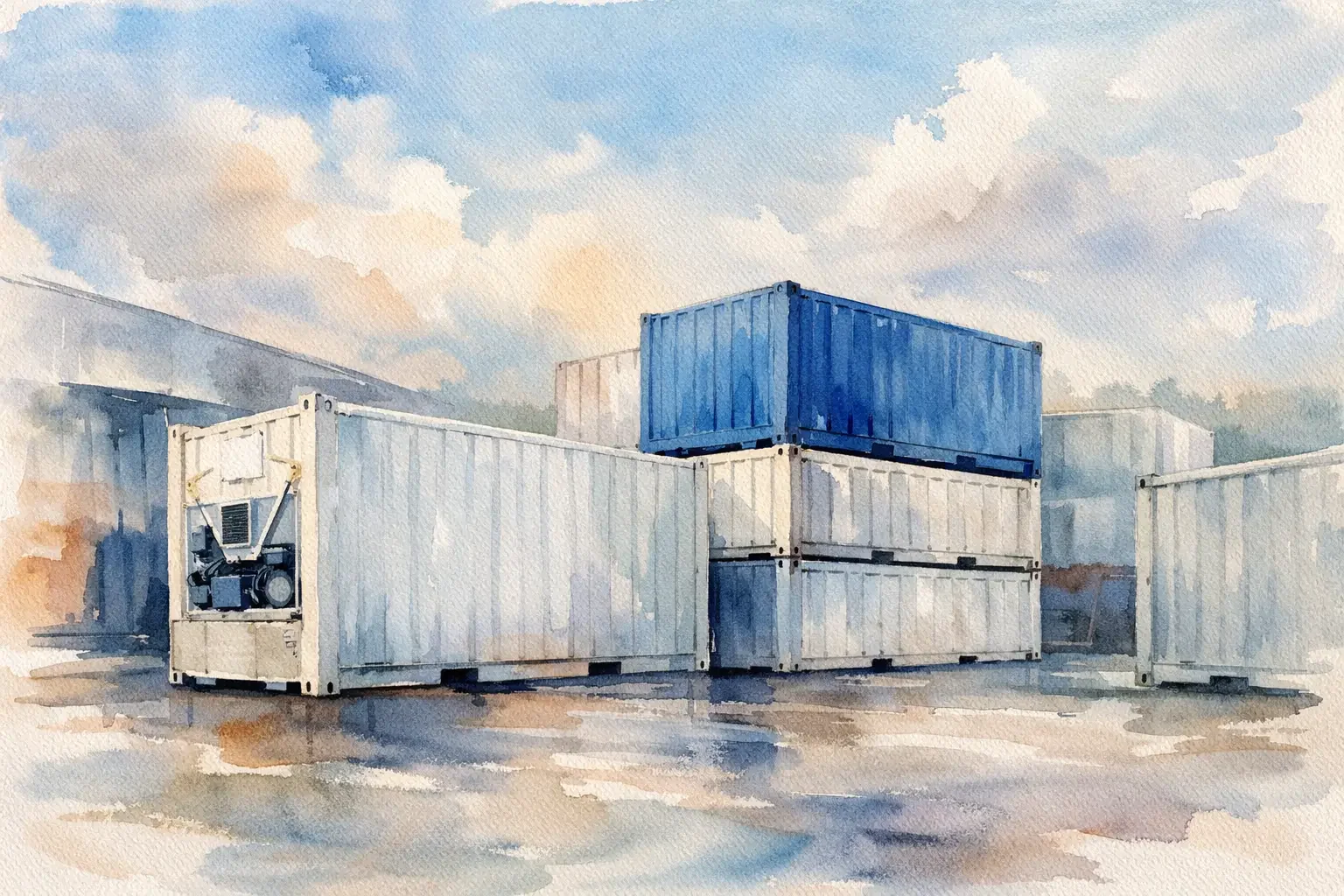
A reefer container can look large enough on paper and still fall short on the job. That usually happens when a buyer sizes the unit around floor area or exterior dimensions instead of the real operating requirement. This cold storage capacity guide helps facilities teams, contractors, food operators, and project managers plan refrigerated container capacity around usable product space, airflow, loading activity, and site conditions.
The right answer is not always the largest container. A larger reefer may provide more inventory room, but it also needs more placement area, electrical capacity, and material-handling clearance. A properly sized unit protects product, keeps receiving organized, and gives crews room to work without interrupting the cold chain.
Start With Usable Cold Storage Capacity
Container capacity is commonly described in cubic feet, but cubic volume is only a starting point. Refrigerated containers need open pathways for conditioned air to circulate around the cargo. Product loaded wall-to-wall, stacked too high, or placed over critical airflow zones can create uneven temperatures even when the refrigeration unit is operating correctly.
A standard 20-foot reefer typically provides about 1,000 cubic feet of internal volume, while a 40-foot reefer commonly provides roughly 2,300 cubic feet. Actual interior dimensions vary by equipment manufacturer, insulation thickness, and refrigeration configuration, so confirm the specifications for the unit being quoted before finalizing pallet counts or racking layouts.
For planning purposes, distinguish between three measurements:
- Gross internal volume is the total enclosed space inside the container.
- Usable storage volume is the space available after allowing for airflow, access, and safe loading.
- Working capacity is the amount of product the operation can receive, rotate, and retrieve efficiently.
Working capacity is the number that matters most. A container that is technically full but difficult to rotate is not providing dependable cold storage.
Size Capacity Around Product and Turnover
Begin with inventory, not container length. Calculate the highest volume of refrigerated product expected on site during normal operations, then account for seasonal surges, delivery schedules, and the time product remains in storage.
A grocery operator may receive several deliveries per week and need enough room to stage a short-term overflow. A food processor may need to hold raw materials, work-in-process inventory, and finished goods in separate temperature ranges. A construction or event project may need temporary cold space for catered meals and beverages during a defined operating window. These uses require different layouts even if the total cubic footage is similar.
Pallet count is often the fastest way to convert inventory into a reefer requirement. Identify the pallet footprint, loaded height, gross weight, and expected number of pallets at peak inventory. Then reserve room for loading and unloading. If staff need to enter the container with a pallet jack, leave a clear travel path rather than treating every square foot as storage.
Storage density also depends on product type. Cartons of frozen food can often be stacked more densely than delicate produce, flowers, pharmaceuticals, or products that require frequent picking. If inventory must be rotated first-in, first-out, the capacity plan needs accessible rows rather than a tightly packed block of product.
Plan for Peak Inventory, Not Average Inventory
Average inventory can be misleading. The busiest day may occur before a holiday weekend, after a delayed shipment, during harvest, or when a facility is waiting for outbound transportation. Sizing only for the average can force crews to overfill the reefer precisely when temperature control and orderly handling are most critical.
A practical planning approach is to estimate peak inventory and add a reasonable operating buffer. The correct buffer depends on delivery reliability and product sensitivity. A site with daily dependable deliveries may need less reserve capacity than a remote operation, a seasonal agricultural business, or a facility that cannot risk product loss during transportation disruptions.
Protect Airflow Inside the Reefer Container
Reefer containers distribute cooled air through a specialized floor system and return air through the cargo area. The refrigeration machinery can only maintain setpoint effectively when air can move as designed. Capacity planning should therefore include empty space by design.
Keep cargo clear of the refrigeration unit and avoid pressing product directly against walls or doors. Do not block the floor channels with loose packaging, shrink wrap, or damaged pallets. Maintain clearance at the top of the load so return air can circulate, especially with high-stacked product.
Loading practices matter as much as nominal capacity. Warm product placed into a reefer in large quantities can raise the internal temperature and extend pull-down time. Most reefer containers are intended to maintain the temperature of pre-cooled cargo, not rapidly chill an entire warm inventory load. If product enters above its required storage temperature, evaluate whether pre-cooling, staged loading, or separate blast-chilling equipment is needed.
This is one of the most common trade-offs in cold storage planning: maximizing pallet positions can reduce the airflow margin that protects product quality. For temperature-sensitive inventory, fewer pallets with consistent air circulation can be the more valuable operating choice.
Match Container Dimensions to the Site
A 20-foot reefer is often a practical choice for constrained sites, smaller inventory volumes, temporary use, or separate storage zones. It can also help operations segregate products by temperature, allergen controls, or handling requirements. Multiple smaller units may offer more flexibility than one large unit when product categories require separation.
A 40-foot reefer is better suited to larger pallet counts, centralized overflow storage, distribution support, and operations that need longer receiving lanes. It reduces the number of refrigeration units to manage, but it requires a longer delivery and placement area.
Before selecting either size, review the site layout beyond the container footprint. The plan should account for delivery truck access, turning radius, door swing, employee access, pallet-jack movement, forklift approach, drainage, and clearance for service work on the refrigeration machinery. A unit that fits within a property boundary may still be impractical if crews cannot safely load it.
Ground conditions deserve the same attention. Place the container on a firm, level base capable of supporting the loaded weight. Uneven placement can affect door operation, drainage, and day-to-day usability. In high-traffic or long-term installations, a prepared pad also improves access for material handling and maintenance.
Confirm Electrical Capacity Before Delivery
Cold storage capacity is only useful when the reefer has consistent power. Most refrigerated containers require a compatible high-voltage electrical connection, often three-phase power, though exact requirements vary by unit. Confirm voltage, phase, amperage, plug type, and available site capacity before scheduling delivery.
Do not assume an existing outlet is sufficient. A qualified electrician should verify the circuit and disconnect arrangement for the specific reefer. Where utility power is unavailable or unreliable, a properly sized generator may support temporary operations, but fuel management, noise, emissions, and backup planning become part of the project scope.
Ambient conditions also affect performance. A reefer operating in direct summer sun in Arizona will face a different heat load than one operating in a shaded northern warehouse yard. Frequent door openings, warm loading docks, and high product turnover add further demand. Capacity calculations should leave room for these real operating conditions rather than assuming a closed container in mild weather.
Build the Interior Around How Crews Work
A reefer can be configured as simple bulk storage, but interior organization often determines whether its capacity is genuinely usable. Pallet storage may require no added equipment beyond a safe loading plan. Cases, ingredients, samples, or frequently picked items may benefit from shelving or a defined aisle layout.
For mixed operations, separate zones can reduce handling errors. One section may hold incoming product awaiting inspection, while another holds approved inventory ready for use. If products require different setpoints, separate reefer containers are usually more reliable than attempting to manage incompatible items in one space.
Door activity should be part of the layout decision. A container used for occasional weekly access can prioritize dense storage. A unit serving as a daily pick location needs a clear path, visible labeling, and enough space for staff to work without leaving doors open longer than necessary. Every extra minute of open-door time introduces warm, moist air and increases refrigeration demand.
Include Capacity for Growth and Contingencies
Cold storage needs often change after a unit arrives. A temporary construction installation becomes a recurring seasonal need. A restaurant group adds locations. A processor gains a new customer. When future demand is likely, consider whether the site can accommodate a second container, a larger unit, or a modular layout from the start.
Rental capacity can be effective for seasonal demand, emergency outages, and short-duration projects. Purchased equipment may make more sense for recurring operations where the unit will remain on site and can be configured for a specific workflow. The best path depends on duration, utilization, capital planning, and how much customization the application requires.
Conexwest can help translate inventory volume, site limitations, power requirements, and delivery access into a reefer container configuration that fits the operation. Bringing those details into the planning process early prevents costly changes after the container is already on site.
The most reliable cold storage plan leaves room for the work, not just the product. Measure peak inventory, protect airflow, verify power, and map the receiving process before selecting a unit. That preparation turns refrigerated container space into dependable operating capacity when your site needs it most.