
Best Container Locks for Jobsites That Work
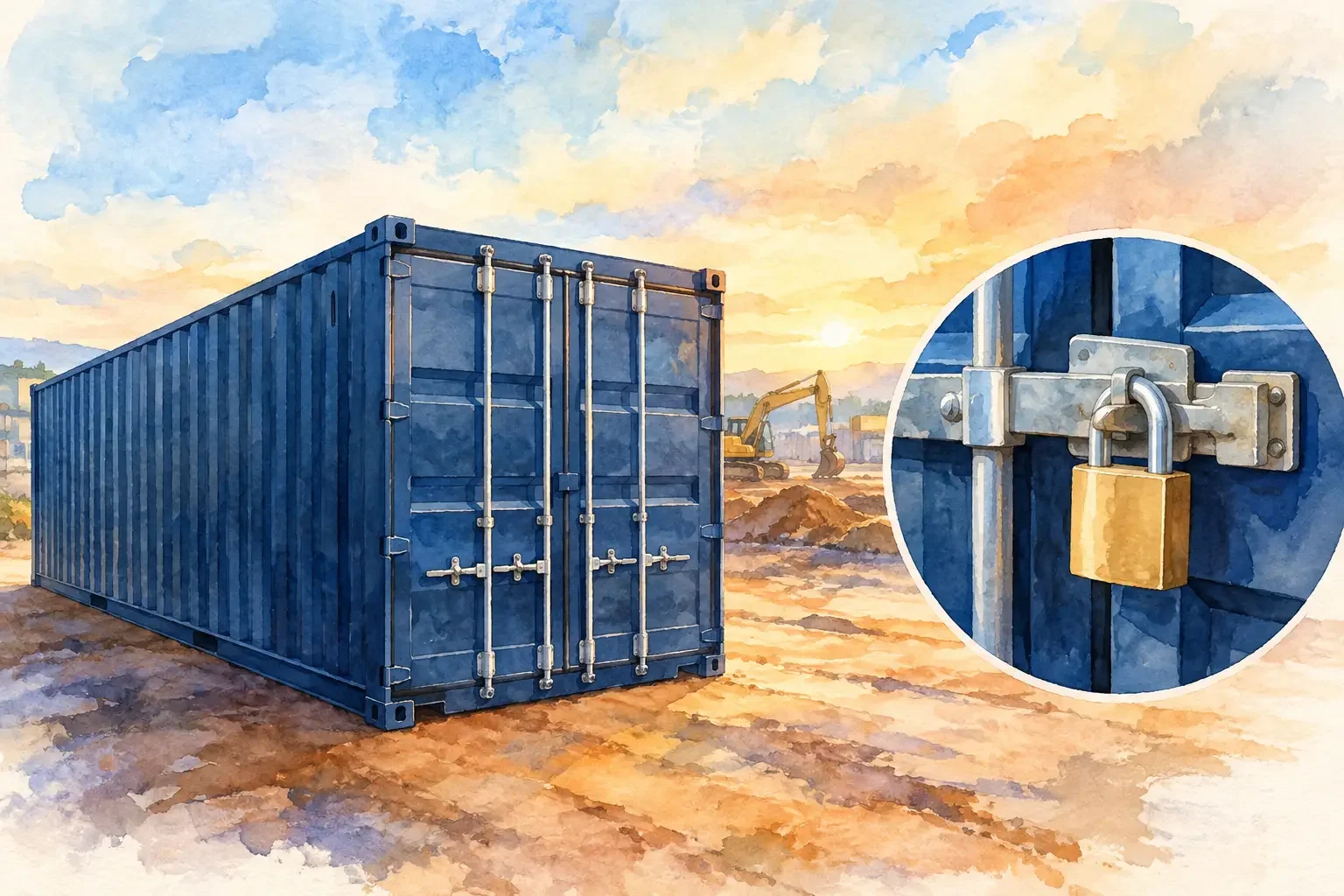
A jobsite container often holds the items that keep work moving: cordless tools, copper, generators, fittings, safety gear, and replacement parts. That makes the best container locks for jobsites less about buying the most expensive padlock and more about removing easy opportunities for theft. The right setup must protect the door hardware, stand up to weather and daily use, and let authorized crews get in without creating an access problem at 6 a.m.
Container security begins at the doors. Standard cargo doors are durable, but their external locking bars and hasps can be vulnerable when they are left exposed. A lock that covers or shields those components changes the amount of time, noise, and effort required to force entry. For most construction sites, that deterrent is the practical goal.
What Makes a Container Lock Right for a Jobsite
A shipping container lock needs to work in field conditions, not just look secure in a catalog. Dust, rain, freeze-thaw cycles, mud, paint overspray, and repeated handling all affect performance. The lock also has to match the container's door design and the site's access routine.
Start with the theft risk. A container behind a controlled gate on an active commercial project has different requirements than one parked overnight on an open rural property. Consider what is stored inside, how visible the container is from the road, whether lighting or cameras are present, and how quickly a stolen item could interrupt the project.
The most effective choices use hardened steel, protected keyways, and a design that limits access to the shackle or locking bars. A standard laminated padlock may be adequate for low-value supplies in a monitored yard, but it leaves too much exposed for containers holding high-value tools or materials. Security hardware should also be compatible with the container itself. A good lock cannot compensate for bent doors, damaged cams, or poorly aligned locking bars.
Best Container Locks for Jobsites by Security Need
There is no single best lock for every container. The right choice depends on whether the priority is convenience, cut resistance, tamper resistance, or a permanent integrated installation.
Lockboxes for permanent container security
A lockbox is a welded steel housing installed over the container's door-hasp area. It shields the padlock body and shackle from bolt cutters, pry bars, and direct impact. Because the lock sits inside a narrow protected enclosure, it is much harder to attack than an exposed padlock.
For frequently used jobsite storage containers, a lockbox is often the strongest long-term option. It becomes part of the container rather than another removable accessory. A properly fabricated lockbox should allow the doors to close and operate normally while leaving sufficient clearance for a high-security padlock.
The trade-off is installation. Lockboxes generally require welding and should be positioned correctly the first time. They are a strong fit when a container will remain in service across multiple projects or when the stored inventory justifies a permanent upgrade. Conexwest can incorporate security-focused modifications during a container build, which helps avoid field-installed hardware that does not align with the doors.
Puck locks for concealed-shackle protection
A puck lock is a round, hardened-steel lock with a hidden or minimally exposed shackle. When paired with a compatible hasp or lockbox, it offers excellent resistance to cutting because there is little exposed material to grab with bolt cutters.
Puck locks work especially well on containers where the owner wants high security without managing a large, protruding lock. Their low-profile shape also reduces the chance of accidental damage from equipment, trailers, or passing materials.
The important qualifier is compatibility. A puck lock is only as secure as the hasp holding it. Do not place a premium puck lock on a thin, exposed hasp that can be pried or cut. For jobsite use, pair it with a heavy-duty lockbox or a purpose-built shrouded hasp.
Heavy-duty shrouded padlocks for flexible access
A shrouded padlock has a steel body that covers much of the shackle. It is more versatile than a puck lock and can be used on container door hasps, gates, storage cages, and equipment enclosures. This makes it a practical choice for contractors managing several temporary storage points.
Look for a solid hardened-steel body, a boron-alloy or similarly hardened shackle, and a cylinder designed to resist picking and drilling. Keyed-alike padlocks can also simplify operations. A superintendent or authorized foreman can carry one key for multiple containers instead of sorting through a ring of nearly identical keys.
A shrouded padlock remains partially exposed, so it is not the top choice for an isolated site with expensive inventory. But paired with a steel lockbox, it provides a highly capable and serviceable jobsite solution.
Crossbar locks for visible deterrence
Crossbar locks span across both container doors and secure them with a central locking mechanism. Their size creates a visible deterrent and makes it more difficult to open one door independently. They can be useful for temporary deployments where welding a lockbox is not practical.
The limitation is that quality varies widely. A light-duty adjustable bar may deter casual theft but can become a weak point under leverage or cutting tools. Choose a crossbar made for shipping container doors, with hardened components and secure mounting points. It should fit tightly enough that it cannot be slipped, twisted, or defeated by manipulating the door hardware.
Crossbar locks are a good middle-ground option for rental containers, short-duration projects, or sites where a permanent modification is not approved. They should be checked regularly because rough handling and door movement can affect fit.
Build Security as a Layered System
The best container locks for jobsites perform better when they are part of a complete site-security plan. A container with a lockbox, an exposed location, no lighting, and a loose key policy still presents an attractive target. Conversely, a moderately secure lock in a well-managed environment can be effective because theft becomes riskier and less convenient.
Use lighting to remove cover around container doors. Position doors toward a traveled area or a camera view when possible, rather than facing a fence line or unlit perimeter. Keep containers elevated only as necessary for delivery and drainage, since excessive clearance below the unit can create hiding space. If multiple containers are on site, arrange them to maintain sight lines instead of creating concealed corridors.
Access control matters as much as steel thickness. Keep a documented keyholder list, retrieve keys when employees or subcontractors leave the project, and avoid leaving keys in site vehicles. For larger operations, consider restricted-key systems or electronic access hardware where the container configuration supports it. These options cost more, but they provide better accountability when crews, shifts, or vendors change frequently.
Inspect the Container Before Upgrading the Lock
A lock should be installed on a container with doors that close squarely and latch fully. Before selecting hardware, inspect the cam keepers, locking bars, hinges, and door gaskets. Corrosion, dents, or a twisted door frame can prevent the lock from seating correctly and can encourage crews to leave doors unsecured because the process becomes frustrating.
Test the doors after delivery and again after the container is placed on site. Uneven ground can rack the frame enough to change door alignment. Leveling the container with suitable supports protects not only access but also the long-term condition of the doors and locking hardware.
For containers converted into offices, workshops, or specialized storage, do not focus only on the original cargo doors. Personnel doors, roll-up doors, windows, and HVAC openings require their own security decisions. A high-security cargo-door lock does little if a side entry door has a basic residential-grade deadbolt or a window is left unprotected in an unattended location.
Choose for Operations, Not Just Strength
The strongest lock is not always the best operational choice if authorized workers bypass it, lose keys, or leave it hanging open during the day. Match the security level to the value of the contents, duration of the project, and number of people requiring access.
For most contractor storage containers, a welded lockbox with a high-security puck lock or shrouded padlock is a dependable baseline. Add a purpose-built crossbar lock when a permanent modification is not feasible, and reinforce the hardware with lighting, controlled keys, and sound container placement. That approach protects the container as the working asset it is: a secure, mobile extension of the jobsite rather than a metal box left to chance.