
Are Shipping Containers Fireproof? Steel's Limits
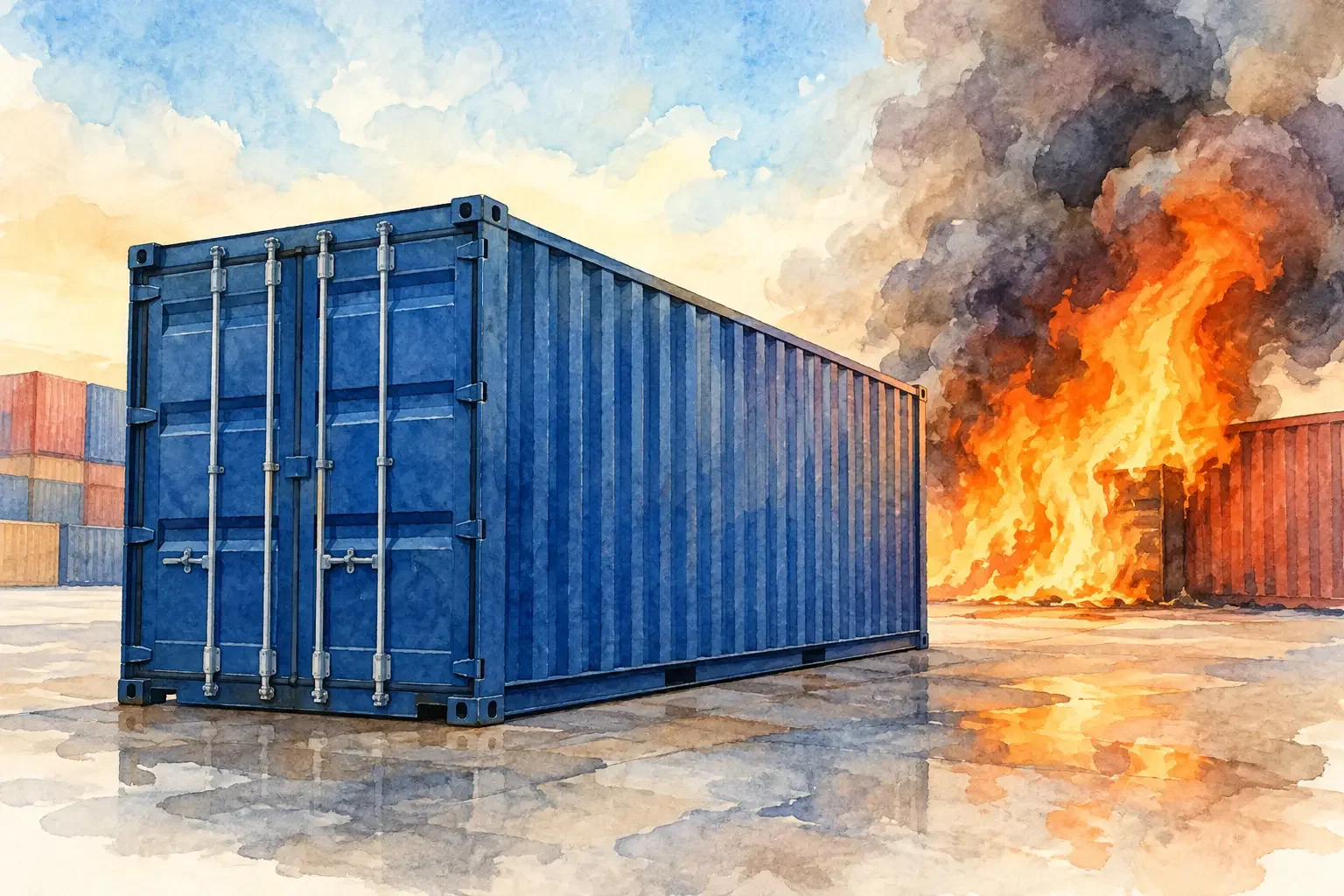
A shipping container can look like the safest place on a job site when sparks are flying nearby. Its corrugated steel shell resists weather, forced entry, and routine impacts far better than many temporary structures. But are shipping containers fireproof? No. They are primarily steel, which does not burn, but a standard container is not automatically a fire-rated enclosure.
That distinction matters when a container will store flammables, house electrical equipment, support a manufacturing operation, or serve as an office where people work. Fire performance depends on the container's use, its modifications, the materials inside it, and the local code requirements for the site.
Are Shipping Containers Fireproof or Fire-Resistant?
“Fireproof” suggests that a structure can withstand fire without damage or loss of function. A standard ISO shipping container cannot make that claim. The steel exterior is noncombustible, but heat can still enter through the roof, walls, doors, floor, vents, windows, and any added penetrations.
A container may be described as fire-resistant in a limited sense because its steel skin will not serve as fuel for a fire. That does not mean it will contain a fire for a specified period, protect its contents from high heat, or remain structurally sound after a severe fire event.
For procurement and facilities teams, the practical question is not whether a container is “fireproof.” It is whether the finished container-based asset meets the level of fire protection required for its intended occupancy, contents, and installation location.
What Happens to a Steel Container in a Fire?
Container walls are generally made from corrugated weathering steel. Steel does not ignite, but it conducts heat efficiently. A fire outside the container can raise interior temperatures quickly, while a fire inside can heat the steel shell and spread dangerous radiant heat to nearby equipment, materials, or structures.
High heat also changes steel's behavior. As temperatures rise, steel loses strength and stiffness. In an extended or high-temperature fire, roof panels can deform, doors can bind, welded components can be stressed, and the container may no longer perform as designed. This is especially relevant for containers that carry roof-mounted HVAC equipment, solar equipment, shelving, mezzanines, or other added loads.
The plywood or bamboo floor in many shipping containers is another consideration. It can char or burn, depending on the floor material, treatment, fire conditions, and exposure time. Paint, sealants, stored packaging, furniture, plastics, fuel, and insulation can also create the combustible load that determines how quickly a fire grows.
Why Modifications Change Fire Risk
An unmodified container has few openings beyond its cargo doors. Once it becomes a field office, equipment enclosure, retail space, or custom facility, its fire profile changes.
Personnel doors, windows, roll-up doors, louvered vents, electrical conduits, plumbing, and HVAC openings interrupt the continuous steel shell. Each opening must be designed and installed for its purpose. If the project needs a rated wall or roof assembly, those details cannot be treated as an afterthought.
Interior finishes deserve equal attention. Spray foam, fiberglass insulation, wood framing, wall panels, adhesives, flooring, and ceiling systems all have different fire and smoke characteristics. An insulated container can be much more comfortable and energy-efficient than a bare steel box, but the wrong material selection or installation method can increase fire risk.
Electrical work is another common source of concern. A properly planned container office or equipment enclosure may need load calculations, protected wiring paths, correctly sized breakers, grounding, lighting, outlets, disconnects, and equipment clearances. Overloaded extension cords and improvised power connections are not a safe substitute for a designed electrical package.
When a Fire-Rated Container Is Needed
A fire-rated container is not simply a standard shipping container with fire extinguishers mounted inside. It is a container-based assembly engineered and built to achieve a particular fire-resistance objective. The required rating, if any, is determined by the authority having jurisdiction, applicable building and fire codes, site conditions, occupancy, and what is being stored or operated inside.
Projects that often need a closer fire-protection review include battery energy storage support spaces, generator and electrical enclosures, chemical or fuel-related storage, welding support areas, commercial kitchens, laboratory uses, and containers placed close to existing buildings or property lines. A container used for general tools and dry construction materials may have a very different requirement than one holding lithium-ion batteries, paint, solvents, compressed gases, or combustible inventory.
If personnel will occupy the space, requirements can extend beyond the wall construction. Egress doors, exit travel paths, emergency lighting, alarms, ventilation, occupancy limits, accessibility, and fire department access may all affect the final design.
Practical Fire-Safety Upgrades for Container Projects
The right solution starts with the use case. For general storage, the goal may be to reduce ignition sources and keep combustible contents organized. For a powered office, it may be a code-compliant electrical system, smoke detection, clear exits, and appropriate interior materials. For higher-hazard applications, the project may require a purpose-built fire-rated assembly and active suppression equipment.
Useful fire-safety measures can include noncombustible or tested fire-rated interior assemblies, rated doors where required, fire-stopping around cable and pipe penetrations, smoke or heat detection, emergency lighting, extinguishers selected for the expected hazards, and mechanical ventilation designed around the equipment or materials inside.
Exterior placement matters as much as interior features. Keep the container clear of brush, pallets, trash, fuel containers, and other combustible materials. Maintain access for occupants and emergency responders. Avoid placing a container so close to a building, fence, or production area that a fire can readily spread between them. Local setbacks and separation distances may apply even for temporary installations.
For units storing flammable or hazardous materials, secondary containment, spill management, ventilation, signage, grounding or bonding provisions, and controlled access may also be necessary. These are operational requirements, not cosmetic upgrades.
Do Reefer Containers Provide Better Fire Protection?
Refrigerated containers, often called reefers, have insulated walls and are designed to maintain controlled temperatures. That does not automatically make them fireproof or fire-rated. Their insulated construction may affect how heat moves through the enclosure, but their panels, refrigeration equipment, electrical components, floor system, and stored products still need to be evaluated for the actual application.
A reefer can be an effective starting point for temperature-sensitive storage, cold-chain capacity, or certain specialized conversions. When fire safety is a primary requirement, however, evaluate the complete finished system rather than assuming insulation equals fire protection.
How to Specify a Safer Container Solution
Before ordering or modifying a unit, define what will be inside it, who will enter it, where it will sit, and what utilities it needs. Those four answers determine far more than container size. They influence the condition of the unit, the layout, door configuration, ventilation, electrical scope, insulation approach, and whether a code review is needed before fabrication begins.
Share the anticipated contents in specific terms. “Equipment storage” can mean hand tools, but it can also mean fuel-powered equipment, battery chargers, welding machines, chemicals, or high-value electronics. Clear information allows the container design to match the operational risk instead of relying on assumptions.
For complex builds, involve the local building department, fire marshal, design professional, or safety team early. A container supplier can fabricate doors, windows, insulation, HVAC, electrical systems, partitions, and specialized layouts, but approval requirements are set by the jurisdiction and project conditions. Addressing them before delivery is usually faster and less expensive than revising a finished unit in the field.
A steel container provides a durable starting point, not a blanket fire-safety guarantee. When the contents, occupancy, and site are defined early, the container can be configured as dependable infrastructure that supports daily operations without leaving fire protection to chance.